It’s in the Collaboration and Connection
[Stuart Carlton]
Teach me about the Great Lakes. Teach me about the Great Lakes.
[Megan Gunn]
Welcome back to Teach Me About the Great Lakes, a twice-ish monthly podcast where we find people smarter and harder working than us to teach us all about the Great Lakes. My name is Megan Gunn and I'm an aquatic education associate with Illinois-Indiana Sea Grant and I know a lot about how long it takes to walk from my office to the building that we do this podcast recording in and it is, or at least I thought I knew, it's never as long as I think it should take me, or I guess it's a little bit longer than I think it should take me, but I don't know a lot about the Great Lakes and so that is why we are here on this lovely podcast.
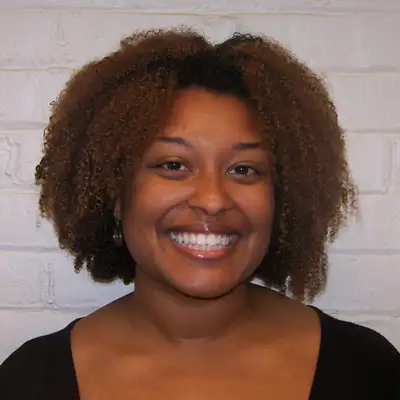
I am joined by Reni Miles. Hi, Reni.
[Reni Miles]
Hi, Megan. How are you doing?
[Megan Gunn]
I'm doing okay. Reni is our strategic communicator here with Illinois Indian Sea Grant and we are, is it lovely in Chicago right now or is it cold?
[Reni Miles]
It's both, yeah. It's a very nice day, but when I stepped outside...
[Megan Gunn]
It looks nice, but yeah, that's my favorite part of winter is just looking at all the snow.
[Reni Miles]
Oh yes, I'm a snow person myself, yeah. Otherwise, what's the point? What's the point of winter without snow?
[Megan Gunn]
I agree. It is not winter for sure. It is something.
It is something, but enough about us. We are joined here today. We have a lovely guest and we're going to learn all about one of our national, I guess not one of ours, one of the local national marine conservation areas.
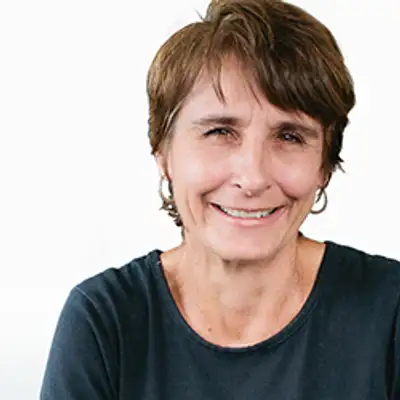
We are joined by Michael Gemmel, Resource Conservation Manager for Lake Superior National Marine Conservation Area. Hi, Michael. Good afternoon.
[Michael Gemmel]
How are you, Megan and Reni?
[Megan Gunn]
I'm doing okay.
[Reni Miles]
I'm good. I'm good. Nice, very nice to meet you.
[Megan Gunn]
We're excited to have you with us today and to learn more about the National Marine Conservation Area. Could you tell us a little bit about what that is and what you all do there?
[Michael Gemmel]
Well, so it is one of Canada's national marine conservation areas. This one is located in Lake Superior on the Canadian side, so it's 10,000 square kilometers or about 4,200 approximately square miles of the waters on the Canadian side of Lake Superior. It exists from the Sibley Peninsula all the way to Bottle Point, from just north of the Nippigan Bridge all the way down to the Canadian-American border.
Within that, there's also approximately 60 square kilometers of islands, small islands that are part of the archipelago that exists on the north shore of Lake Superior that make up this National Marine Conservation Area. That's kind of who and where we are. We're part of Parks Canada.
What do we do there? That's the more interesting question. I think it really comes down to the fact that we're coming into establishment, meaning that we're just getting to the point that we're going to legislatively exist.
We're coming in into a landscape of amazing work that has been going on in the Great Lakes under the Great Lakes Fishery Commission, under the Great Lakes Water Quality Agreement. Individual states, tribal council provinces, and federal are all working together to protect a resource that, if you look at public opinion, is highly valued and recognized. So, it's in that context that we suddenly find ourselves.
This is part of, in many ways, the 30 by 30 goals internationally that Canada wants to protect marine and freshwater ecosystems. We're adding to that value. Here we are protecting freshwater on the largest freshwater lake by surface area in the world, third deepest by volume in the world.
We've come to do that. This Act sets up that it's going to do certain things, such as protect from oil and gas and aggregate mining development, protect from bottom trawling, and protect from certain amounts of disposal in marine environments, dumping and things like that. We already have a number in the Great Lakes, so more opposed to the ocean side of things, but that sets up the baseline in terms of what we get to do automatically by the desire of Canadians on this side, that this would be a great place to establish one.
[Megan Gunn]
Could you tell us a little bit more about what the process is to get an area like this approved?
[Michael Gemmel]
In our case, each place is going to take its own amount of time, is the best way to put it, because the process is generally a five-step process. Identifying a marine area that's representative, because the way that the agency has set out that we're going to establish these is by looking at the 29 marine regions in Canada and trying to get representative examples in each of those areas. In Lake Superior, this is this one's representative area.
We select a candidate and that's part of a feasibility process. After that, we have to do the big hard work of negotiating agreements. In the case of Lake Superior, we had to negotiate agreements with each of the local First Nations, with all the communities, and of course with the provincial government, who's a great partner in this.
Then we're going to find ourselves right now, as we have finished those agreements, is that we're transferring land and doing those processes. Then once that happens, the final step, we're going to designate and protect the NMCA in the legislation of the Canada National Marine Conservation Act.
[Reni Miles]
First of all, I love listening to you say process. As someone from Chicago, I come from the other end of the spectrum. We say process.
My question is about the site itself. I'm curious to know why this location is designated as a conservation area and what sort of things make it special?
[Michael Gemmel]
First off, it's the headwaters of the Great Lakes, immediately making it special. When you look at it from that side of the headwaters of the Great Lakes, water that can exist in this reservoir for 191 years before it flows out, is going to then go past so many other residents on the Great Lakes and interact with so many others in terms of their recreation and drinking water and things like that. We're part of that initial protection of this water source.
The other reason is, right away, it's beautiful, strikingly beautiful up here. I would encourage any of your listeners to come around. Actually, there's what's called a circle tour, where you circle Lake Superior through driving.
One of my favorite parts of that drive is the drive on Highway 17 in Ontario. There's just so many lookoffs because you're driving up these hills and you get to look off into Lake Superior. On this north side of Superior, we have the boreal forest start of that ecotype.
Also, we have Canadian Shield. You just have this rough, rugged terrain that mixes with the water and creates these striking views of beautiful, fresh water. It was described as a sweet water sea.
That's really what it is. Some people think lake, and they think about where you put a little boat in and float around. But really, we're talking an inland sea here.
We're talking a body of water. It's funny, you're talking to me in November. This is the month of the Edmund Fitz Gerald song.
Obviously, we talk about the fact that there's been shipping on the Great Lakes from that song. But it's also the other side of it. The beauty is that unquenched power of that water body, that waves can get to being eight meters high.
They can throw things around. Even when we go out on the water, you can get oceans swell, where you get this swell that you ride. It's not just wave action.
It's just pure swell that you're dealing with out there. Beauty, but also, there's things about this part of the lake that are unique. We have the Coaster Brook trout.
The largest Brook trout in the world was caught on the Nippigan River, just north of us. We have these Coaster Brook trout, a unique ecotype of Brook trout that live and grow quite big in the NMCA. With the mix of geography, geology, and unique habitats, because even within the island chain on the archipelago, we have Arctic disjunct populations of alpine plants.
It's just the fact that Lake Superior is a cooler. It regulates that temperature pretty well and actually keeps things quite cold because you can have ice on the lake up until the end of May. These populations get to have this cold climate, which is the reason why they've persisted on the landscape in these disjunct populations.
So, for all these reasons, including our human, our cultural reasons, with hunting, fishing camps, logging camps, and transportation in terms of wrecks, are all reasons why this was selected as being representative of this ecoregion.
[Reni Miles]
I was just going to harken back to what you said earlier about all the research that's going on in the area. I assume that's helping to inform some of the management decisions. Maybe you can kind of share what else plays a role and how you come to decide about those sorts of things.
[Michael Gemmel]
All the work that is being done is factoring greatly into how we are operating. I think one of the things that is really important that really comes in our policy about National Marine Conservation Areas is the fact that we are using seven sort of guiding principles. So, we're supposed to be inclusive and collaborative.
Through that, we can be transparent in our processes, especially in collaboration and engagement. Respectful, respecting everyone who's coming to the table, Indigenous peoples and their roles in stewardship, roles in our community members and other agencies by national agreements. That being said, we're very ecosystem-based.
We're looking at ecosystems through all the work that you just mentioned. So, it has to be knowledge-informed decision-making. Seeing that there is a great wealth of science going on, we take that into all of our decision processes.
So, it has to be informed not just by science, but Indigenous knowledge and local perspective as well. Then we, using all that, take on a precautionary role in our management actions so that where there are threats of environmental damage, if there's lack of certainty, it's not used as a reason of postponing any of our actions. We will continue to fill gaps, but we'll take the precautionary principle and we'll be adaptive.
Then finally, climate-informed as our principles. So, we are highly collaborative, meaning that we actually have a lot of things that we do to engage partners. Currently, we have an interim liaison management committee.
So, we have an opportunity twice a year to sit down with representatives from local community groups, municipalities, First Nations to be able to share what's going on within the site and they can share back what's going on. We also have a harmonization committee where we meet with particularly our partner in the provincial government. So, we have many different representatives from each kind of department that come and discuss the work that happens within the NMCA because there are things under the Act that we don't take over.
We didn't just draw lines on a map and say we're taking over everything. We work in collaboration. So, in the National Marine Conservation Area Act, there's still retainment by the Department of Transportation to look after water travel on the Great Lakes.
DFO still retains fisheries management, but in the province of Ontario, they gave that responsibility to the Ministry of Natural Resources, a provincial entity, so they maintain their role in managing fisheries. And so, with that, we have to work together constantly and there's many ways in which we do that. In fact, the way that we've set up our monitoring plan because we have an ecological sustainability monitoring program, that way we can show that we are protecting and preserving and sustainably using the resource for current and future generations.
This monitoring plan is not just all things we're doing. We're tasked with working collaboratively and regionally. So, we're working on regional data sets.
We're adding value by going and getting to work on long existing data sets, such as the Ministry of Environment, Culture and Climate with the province, and they do a near shore assessment that involves water quality monitoring in Zooplankton. And so, we are either doing things in our monitoring program where we're spatially densifying sites and adding to the data sets or we're densifying in terms of time return to visit those points and having increased knowledge by collecting, not just spatially, but temporally increased in our visitation times.
[Megan Gunn]
I guess while you're doing all this monitoring, are there any specific species that you're focusing on? Any species at risk that you are focusing on? Anything that the public should know about?
[Michael Gemmel]
So, a lot of what we're looking at is habitat, species composition, but to answer your question, we are working on what's called a multi-species action plan. This is our response in terms of species at risk recovery in our site. So, it's kind of our legislative response to national recovery strategies for each species.
So, where they overlap with us, we look at that. And we're not working alone. We're working collaboratively with other organizations that are taking leads on each of these species.
And so, species that are interesting to us are at times migratory. They're visiting the site as they migrate up north. And so, there's a bunch of things that come through such as red knots and short-eared owls and rusty blackbirds.
And so, we help, and there's actually at the tip of the Sibley Peninsula, and I've got a map down here, but it's way down here. There's a bird banding station, which we help support for it to run. So, that way we can get information on that.
We work with Department of Fisheries and Oceans as they work on things. And the USGS in their ship, the Kai'ai, does work on looking at things like deepwater sculpin and the upper Great Lakes Kai'ai as species at risk that we're interested in as well. And then, of course, there's concern about bats.
And we know that there's bats that are out in the area. And so, those are ones that we are working with partners on. And once we identify some of our actions for recovery, whether it's communication pieces or setting up our site in terms of zoning, which is, I think, another really important part of how we protect things and what we are.
Because when we talk about being a site that's protection, I really kind of think that we are Parks 2.0. So, national parks in Canada are like the highest form of land protection. There are areas set aside almost completely for conservation. They have a recreational focus as well.
But once in there, there's no extractive uses of them. And here we have opportunities where when I talk about our ecological sustainability monitoring, there can be sustainable use of the resources. Meaning that within a national marine conservation area, there can be commercial fishing, recreational fishing, there can be hunting, there can be things like aquaculture and even green energy.
But that's all based upon a zoning plan. And because each zone within a national marine conservation area means different levels of protection. So, zone one would be strict protection, the highest form.
And currently in our interim management plan, we have two zone one features. One is Gapin's Pool, which is just north of the Nifigan Bridge. It's actually an area of spotting area for coastal brook trout and is a fish sanctuary.
And the other one is a cultural resource, the Wreck of the Ganilda. And it's a very beautiful wreck. It was actually died by Jacques Cousseau.
And he said it was one of the most beautiful wrecks in the world.
[Reni Miles]
What made it so pretty?
[Michael Gemmel]
Think of a luxury yacht of its time.
And with all the filigree and ornateness. And the fact that it ran aground. It ran aground on a shoal and the rich yacht owner had asked for the help to get it off.
And so they said, well, it's going to take two tugs to pull it off and bring it back safe and it will cost this much. And he said, no, you can do it with one and I'll save the cost of the other tug. Well, unfortunately that didn't work out for him because they pulled it off and they could not keep it afloat to get to dock.
And it sunk, not just on the shoal, it sunk in deeper water where it is well preserved. And because it drifted down so gingerly, it's not broken apart and scattered. So it's down there looking pretty.
Have you seen it? I've seen pictures of it. I haven't dove it.
But there is some video and things of that. In fact, there was a nice little article that came out with pictures of it just this month.
[Megan Gunn]
Okay. We will include that in our show notes for our listeners to check out.
[Reni Miles]
So you're talking about the zones.
[Michael Gemmel]
Zones. Yeah. Sorry, can I finish that?
[Reni Miles]
Oh, I'm sorry.
[Michael Gemmel]
So there are four zone types, right? And I talked about strict protection in zone one. Zone two is more general protection zone.
And this is where you can still have recreation in that area, but non-extractive uses are not permitted. Then you have habitat protection zone in zone three. And this one does allow certain extractive things.
So you can still have things like hunting and fishing where it's regulated by, in our case, the provincial government. And then in zone four, you can have your more widely uses, including commercial uses. Currently, our zoning is the zone one features I talked about and then zone four.
But, you know, we have the ability when working with partners to implement those zones as part of our ways in which we protect species and habitats and being able to then buffer these areas. Because I've worked for Parks Canada and other sites in the Great Lakes, including Georgian Bay Islands National Park and Thousand Islands National Park, beautiful areas. And one of the things that becomes kind of apparent at times is that you have these wonderful protected islands that are then in high protection.
And then a budding on the next island over is a private cottage that's quite large and then different uses. So in our case, we have this ability to have high protected area and buffer it, right, to protect it further.
[Megan Gunn]
So once this area is finished being established, what are some of the things besides like hunting and fishing and the circle tour? What are some of the things that community members can come and do when they come to visit?
[Michael Gemmel]
One thing that is available is that, you know, we are encouraged in terms of our community well-being that and we're going to be pointing to offers that are in these communities. So, you know, who's got charters available? Who does kayak tours?
And there's a wonderful kayak tour you can do through the archipelago that will take you a number of days as you paddle through. And it is absolutely beautiful. And it can make you feel like you're the only one out there because it's kind of this in a way an undiscovered place, right?
Because it's just further away from a number of major population centers. And there's also, you know, diving that you can do. And you also have access to hunting and fishing guides.
And there's marinas and access points in our communities along the such as Terrace Bay and Red Rock and Nipigon and Silver Islet. And there's also tours of lighthouses within the Lighthouse Association. And if you're really interested in it, those Lighthouse Associations have different programming such as artist in residence or being able to go out and they have campsites at those islands.
And then there's other tours, because down at Silver Islet, there's an old silver mine that is now underwater. There was a on the island, there was a beautiful silver vein, and they started mining it. And to do so they created a barrier from the lake and pumped it all out to dry that out and go down and, and mine silver and then one Christmas due to weather, they couldn't get the fuel for the pumps.
And they pulled everyone out. And, and unfortunately, when that that pump ran out of gas, that was it when it ran out of fuel, that was it and and the water came in and oh my gosh, they never, never recovered. And so now you can actually float right over that mine shaft and look down a little bit of facile phobia for some people.
But you know, yeah, you've got that. And of course, as you go along, and it doesn't have to just be things right in the NMCA along it, we have a number of protected areas, including Ontario Provincial Parks, such as Sleeping Giant and Rainbow Falls, where there's opportunities to camp and hike. Cascade Trail is a great way to hike the shoreline of North Superior.
So there's all sorts of opportunities there to recreate and, and see this area.
[Reni Miles]
So do, do folks go scuba diving to see some of these wonderful things that are buried treasures?
[Michael Gemmel]
So there are wrecks that are known for, as opportunities to scuba dive on. It's, yeah, and so that that does happen. So it usually in the shallower wrecks.
And then of course, there's cruise ships that are now in the area that are doing their tours, bringing international visitors to this area. And one of them even has a submarine that they currently take a few people down to view the wreck of the Ganelda.
[Megan Gunn]
That is super neat.
[Reni Miles]
I read that there's some indigenous structures under the water. Is that, is that true?
[Michael Gemmel]
There's a number of interesting features. Now there's pictographs that are in certain spots along the shore. There's the Puccasaw pits that are more towards Puccasaw National Park, but that exists in other places that have significance to this area.
And, and then there's also like the, the thoughts of that there are underwater landscapes that reference back to possibilities of when the lake level was below the outlet, that there was more dry land. So I'm not, and then of course there's stories, right? Certain stories about little people and things coming out of certain underwater caves and things like that along the Superior that have been told.
[Megan Gunn]
Well, this has been fascinating, Michael Gimmel, to learn more about all the work that you all are doing in the Lake Superior National Marine Conservation Area. But that is not why we bring you on here, this good show that we have. We bring you on this good show to learn about two things.
One of which is to learn when we do our road trip of the circle tour that we will do one day. If you could choose to have a great donut for breakfast or a great sandwich for lunch, which would you choose and where should we go on our circle tour to find it?
[Michael Gemmel]
Obviously both delicious options. I agree. But I'm going to say that in Thunder Bay, Ontario, they have a local delicacy called a Persian.
So this is a deep fried cinnamon bun made out of donut batter topped with the raspberry icing. I think that is an excellent treat for any breakfast meeting or to take out and eat on any shoreline area of Lake Superior.
[Megan Gunn]
That sounds amazing. Reni, do you want to take the next one?
[Reni Miles]
So our second question is what is a special place in the Great Lakes that you would like to share with our audience? And what makes it special? And I imagine you have talked already about some of that.
But please share some more.
[Michael Gemmel]
I have. I can point to a number of things I have already said in this episode of special places. I talked about Georgia Islands National Park.
I've talked about just our marine conservation area and that beautiful drive on Highway 17 to look out on Lake Superior. All special places, all beautiful places. But I think I have to deliver to you a cop out answer because I think when I think sometimes the Great Lakes, some of the most special kind of place for me is like, take any of the Great Lakes, especially some of the bigger ones, the ones that are left to develop like Huron and Superior, but even middle of Lake Michigan, the middle of these lakes.
Being out there, you know, whether sailing or on a cruise and just being able to look out and see nothing but water. It just, it makes you feel small, right? It just, it invokes that sense of that you're in something bigger than yourself.
And I like it too, because also not everyone gets to be out there, and you know, but then add in that you do this during the night and you're in what almost is like a dark sky preserve in its own sense, just being away from every little town and every city. And you get to just look out then on dark water with the Milky Way traveling across the sky. And then you feel even smaller.
[Reni Miles]
That sounds fantastic.
[Michael Gemmel]
And yeah, and then having any chance at Aurora Borealis or other things. But yeah, it's out there that you just realize that, you know, in terms of perspective, that you're just this, as much as you're small, that, you know, it's realizing that it is special. And that there you are looking at your chart and it overlaps right on the boundary and you realize it's shared.
It's something that to take care of this feature, you have to do it with others. You have to involve others and be part of that greater thing. And so, yeah, I bring that to mind.
The fact that, you know, it is in that collaboration and that connection that we can take care of this special place, which is the entire Great Lakes system.
[Megan Gunn]
Nice. I think that's a lovely way to end it. Thank you, Michael.
Again, Resource Conservation Manager for the Lake Superior National Marine Conservation Area. Thank you for teaching us all about the Great Lakes.
[Michael Gemmel]
Thank you very much.
[Megan Gunn]
Well, that was fascinating to learn more about Michael's work in the Lake Superior National Marine Conservation Area that just, every time I listen to one of our speakers share something, it's always like, okay, this is another place to visit. I want to go visit all of the places, but will Stuart pay for it? Probably not.
But maybe we should find a way to just come, just go and see all of these beautiful locations. Rainy, is there anything special that you learned today that you weren't expecting or?
[Reni Miles]
Yeah, I guess I don't think about like shipwrecks as being beautiful. So that was a cool, cool thing. It makes me wonder how they, you know, how they stay so intact down there.
And I know nothing about shipwrecks.
[Megan Gunn]
Well, we should listen. We should get Ashley Eaton on. Ashley has done a lot of, she's Dr. Ashley Eaton, is one of our partners out of the University of Wisconsin, and she's done a lot of marine archaeology work. And so maybe she could tell us more about how the shipwrecks are preserved. What about the lakes have kept them so pristine? Yeah, we have some awesome things coming up for you all.
Please tune in. We have a couple episodes left for this new year, or I guess not this new year, a few episodes left for 2025. Definitely check into our season of giving episode is where we will highlight our nonprofits and local organizations that are doing great things to preserve the Great Lakes.
And then, of course, our Lakeys episode. It is a wonderful time to highlight some organizations or podcasts or articles or really anything. We have several categories that you can choose from.
Things that have been happening around the Great Lakes that you want to share with us. We will have a link to a nomination form in our show notes here. And we want to hear from you all.
What things do you think deserve a Lakeys?
[Reni Miles]
Teach Me About the Great Lakes is brought to you by the fine people at Illinois Indiana Sea Grant. We encourage you to check out the cool stuff we do at iiseagrant.org and at ilincgrant on Facebook, Instagram, Blue Sky, and other social media.
[Megan Gunn]
Our senior producer is Carolyn Foley and Teach Me About the Great Lakes is produced by Megan the Lake Lover Gun and Reni Miles. Ethan Chitty is our associate producer and fixer and our coordinating producers Motia Gumbiade. Our super fun podcast artwork is by Joel Davenport and the show is edited by our lovely Sandra Sabota.
[Reni Miles]
If you have a question or comment about the show, please email it to teachmeaboutthegreatlakes at gmail.com or leave a message on our hotline at 765-496-IISG which is 4474. Or if you want, send us a postcard. We love postcards.
[Megan Gunn]
Thanks for listening and keep grading those lakes.