Standing on a Groin
[Stuart Carlton]
Teach me about the Great Lakes. Teach me about the Great Lakes. Welcome back to Teach Me About the Great Lakes, a twice-monthly podcast known for a metronome-like consistency in which I, a Great Lakes novice, ask people who are smarter and harder working than I am to teach me all about the Great Lakes.
My name is Stuart Carlton, and I know a lot about the clumps at the bottom of the protein shake, but I don't know a lot about the Great Lakes, and that is the point of this year's show. I'm joined today by the one, the only, the special Megan the Lake Lover Gunn. Aquatic, you know, titles are, who knows what our title is?
Nobody knows. We know what it ain't. Anyway, Megan, let's get it started.
We have, actually, we like to start the top of our show with an Ask Megan question, and so today's Ask Megan question comes from the great Amy, Listener, and the question is this. What's your favorite benthic invertebrate?
[Megan Gunn]
So if I had to choose just one. You do. Because I love them all.
[Stuart Carlton]
Favorite implies one.
[Megan Gunn]
I would probably say the caddisfly larvae. Caddisflies are really good water quality indicators, but they also, the different species, will surround their bodies in whatever is around them. So maybe it's like little pieces of sand, or maybe it's leafy debris, and they will then fuse themselves to a hard substrate, and then they peek their heads out, and then eat whatever is floating by. But yeah.
[Stuart Carlton]
Really?
[Megan Gunn]
Yeah, they're really cute.
[Stuart Carlton]
Where are they? Like.
[Megan Gunn]
Everywhere.
[Stuart Carlton]
Do they have them in the Great Lakes? They have caddisfly there?
[Megan Gunn]
They do have them in the Great Lakes. I was just out with a school group last week in Kokomo, and we were finding all kinds of caddisfly larvae, because Wildcat Creek is also a good water body. Interesting. So you're in Kokomo?
Yes. Yes. We were in Kokomo, and taking high schools out, high school, taking high school students outside to just let them learn about how they're connected to their local watershed.
[Stuart Carlton]
There you go. And so they indicate water quality, meaning the presence of them means decent water quality, or when you see them you're hosed?
[Megan Gunn]
No, when we see these, they indicate good water quality. When we see some others, like aquatic worms, but they're everywhere, they indicate a little bit more polluted bodies of water. But the best bodies of water have a good mix of both.
[Stuart Carlton]
Yeah, I love a nice body of water.
[Megan Gunn]
I, me too.
[Stuart Carlton]
All right, well if you want to open up our show with an Ask Megan question, send us an email teaching about the Great Lakes.
[Megan Gunn]
And I will answer it not as nasally as I am right now.
[Stuart Carlton]
Well, maybe.
[Megan Gunn]
Germs.
[Stuart Carlton]
Our guest today, we're locking up a couple all-stars here. Two new Illinois Indiana Sea Grant, well relatively new at this point, employees.
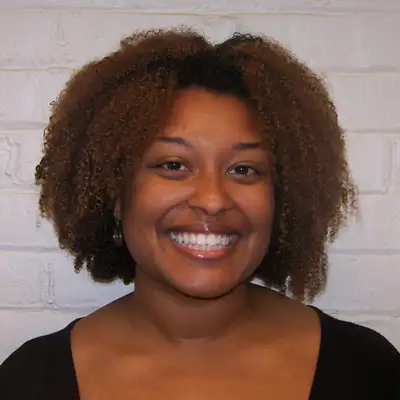
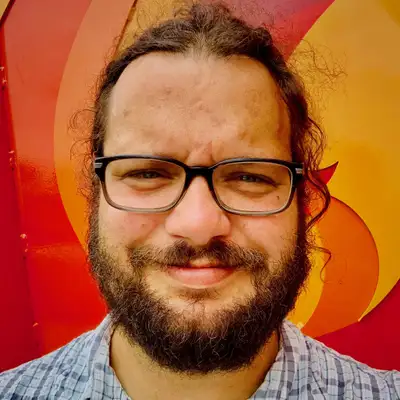
Dr. Sarah Peterson is our Coastal Engineering and Community Resilience Specialist, and she's located up at Chesterton, Indiana, right near the south shore of Lake Michigan. And Dr. Hilary Glandon is our Coastal Ecosystem and Community Resilience Specialist too. And she is, Hilary, where are you in Chicago?
[Hilary Glandon]
I'm in Zion, Illinois.
[Stuart Carlton]
Where is Zion?
[Hilary Glandon]
Zion is in Illinois Beach State Park. Or Illinois Beach State Park is in Zion. I'll rephrase.
[Stuart Carlton]
Yeah, that's probably true. It's not like Vatican City situation. Okay.
Anyway, Dr. Hilary Glandon is our Coastal Ecosystem and Community Resilience Specialist. So we have two people who are focused a lot on community resilience, one from the engineering side and one from the coastal ecosystem side. And that is exciting.
Drs. Peterson and Glandon, how are you doing today?
[Sarah Peterson]
Hey, Stuart and Megan. Thanks for having us. I'm doing good.
[Stuart Carlton]
Excellent. So are you a benthic invert person, Sarah?
[Sarah Peterson]
Not necessarily. I'm more on the coastal structure side of things. Hilary might be though.
[Hilary Glandon]
I probably know more about benthic inverts maybe than Sarah, but I'm more of a fish person.
[Stuart Carlton]
Excellent.
[Hilary Glandon]
Aren't we all fish people? Fish are the best.
[Sarah Peterson]
Yes.
[Stuart Carlton]
Are they?
[Hilary Glandon]
Yeah.
[Stuart Carlton]
Okay. Yes. Then we're all fish people except for Sarah, which is fine.
No, that's good. Great. So we're talking about community resilience and coastal resilience.
That's a weird thing to be talking about in the Great Lakes, I feel like, because when I think about coastal communities, I think about sea level rise, which I used to do a lot of work on back when I lived in Texas and in Florida and grew up in Louisiana. So Sarah, is sea level rise, does the Great Lakes, I mean, I'm playing dumb. In the Great Lakes, it's more about lake level variability, right?
What do we know about the variable lake levels in Lake Michigan or the Great Lakes generally?
[Sarah Peterson]
Yeah. So that's a great question. The Great Lakes have much more variable water level fluctuations compared to ocean environments.
So for example, let's say annually, you might see on a millimeter or centimeter scale in the ocean of rising over a versus in the Great Lakes, we typically see meter scale changes. And we see everything from short-term and seasonal fluctuations to inter-annual and decadal fluctuations. And actually between 2012 and 2020, we saw just over six feet of water level rise in Lake Michigan.
So much more substantial in terms of water level fluctuations, which is slightly different too in the oceans. They have tides, so they'll have that on the daily scale. In the Great Lakes, we don't typically see tides.
They're at a centimeter scale, so pretty small, but we do see more fluctuations over the midterm range there.
[Stuart Carlton]
Okay. So it's more, but in that time, that 2012 to 2020, we saw six feet of change, but it went from just deadly low, deadly low, like historically low to historically high in that period, right?
[Sarah Peterson]
Yes. Yeah. Record lows to near record highs.
[Stuart Carlton]
What is it that, and we've talked about this before, but it's just leaked straight out of my brain. What is it that leads to that, such change in such variation?
[Sarah Peterson]
Yeah, there are a lot of factors that can contribute it. A large one is precipitation and evaporation. So the ins and outs of the system itself.
So if you have a really high year of precipitation, you get a lot of water coming into the system. Let's say you're not getting a lot of evaporation out of it that can influence the amount of water in there. Also ice cover plays a role as well.
So there's a lot of factors that are contributing to these variabilities.
[Megan Gunn]
If you have more ice cover, do you have higher levels of change or how does that relationship work?
[Sarah Peterson]
Yeah. So typically if you have more ice cover, that can lead to less evaporation.
[Hilary Glandon]
Yeah. I would add that, you know, lake level fluctuation is something that is really complicated and we don't fully understand how, we don't fully understand how lake levels change well enough to do very accurate predictive modeling. There's models, right?
But they include a ton of uncertainty, usually higher levels of uncertainty than most researchers are willing to like bet on. So yeah, it's a very active sort of area of research because as Sarah said, it really influences almost everything that occurs in the Great Lakes. So we ideally want to have a really good idea of how to predict that in the future.
[Stuart Carlton]
What's the problem with the models is that we need just bigger computers essentially, or is it, you know, is it, we aren't sure what all the right variables to put in the models are.
[Hilary Glandon]
I mean, I would say more of the latter than the former. I think the computers are big enough.
[Stuart Carlton]
Excellent. Okay. And so these lake level variability is one thing that contributes to community resilience, right?
Or community resilience issues. And so that's one big issue facing the communities. What are some other issues?
That's the one I think of right away, lake level change. What are other issues that might affect community resilience in the Great Lakes? Hilary, do you have something?
[Hilary Glandon]
Resilience may be specifically in Southern Lake, Michigan, which is where Sarah and I are located. It's a little bit of a different system in some ways than the other parts of the Great Lakes, because we have a very highly populated, heavily industrialized area, right? And so when we talk about, when you mentioned lake level fluctuations, when you have low lake levels, it seems like your coastal resources are almost like, or the land that's available for coastal uses is almost unlimited, right?
And so when you have planning that occurs in a period of low lake levels, some of that infrastructure doesn't really hold up as lake levels come up. And so ideally, from like a coastal hazard perspective, we would be planning based on high lake levels, right? Because if your infrastructure is holding up and your ecosystems and all the things that you value about the lake are holding up in a high lake level year, then they're going to do great in a low lake level year.
So in Southern Lake, Michigan, we have a lot of permanent human-built structures that have very little flexibility in terms of adapting to large changes like lake levels. Like we have an entire gigantic city built with hardened structures on the lake, right? Where we can't just move it back.
And so I think those trying to support people and animals and coastal processes occurring in that system that really values like, right, Chicago exists on the lake, exists where it does because of the lake, right? And so, you know, in order to do that, when you see all these big changes, you know, in terms of driven around lake levels, that can be really, really complicated in Southern Lake, Michigan. And there's not really a lot of other analogs within the Great Lakes to sort of learn from.
So we're kind of doing our best here.
[Stuart Carlton]
Yeah. I never thought about that. That's such a good point.
So like in 1992, there was Hurricane Andrew in Florida, right? And that just leveled, Homestead was the name of the you know, in South Florida there. And they spent a decade working on it.
But then in 2002, completely revised building codes came out to be resistant to a hurricane of that strength, at least ideally. And in Florida, the development is so rapid that, you know, there was plenty of development with that post 1992 standards. But Chicago's been around forever, right?
And so, and I think that the coastal communities aren't developing here at the same speed that they did in Florida over the last 30 or 40 years. Although I don't know, that's just my anecdotal sort of thing. And so that's an interesting challenge is like, what do you design for?
Sarah, you do a lot of work in coastal engineering. Like, do you have thoughts on, you know, how should we incorporate high lake levels into our design processes or into our engineering? Or what are some things we can do about it?
[Sarah Peterson]
Yeah, great question. So coastal engineers and consultants do consider high water level conditions in their design codes. So they typically think of design storms and high wave environments to build these structures from.
The issue is that these changes are adapting from previous high storm events. So with the changing climate, we're seeing greater frequency of extreme storms that are kind of overtopping and exacerbating existing infrastructure that was maybe built back in the 1960s. So there's a lot of changes throughout that.
And building off Hillary's comment too, you know, the infrastructure is very vast in southern Lake Michigan, lots of different types, lots that have been in existence for a long time. And so another major issue that communities in these areas down here are facing is sediment transport issues. So with the implementation of these structures, a lot of them alter natural processes and currents, which can lead to either a lot of sediment accumulating in certain locations or sediment deprivation and worsened erosion, which kind of sparks this never ending cycle of the need for more coastal protection structures.
So yes, it's important to consider water level fluctuations and how that influences structure, but also, you know, what's surrounding where you're trying to manage a coastline.
[Megan Gunn]
Could you give us some examples of what those structures might be?
[Sarah Peterson]
Sure. Yeah. So there are several different types of coastal protection structures.
If we're talking about like traditional gray infrastructure, revetments are a very common one. So those are the big rocks you would see that are parallel to the shoreline. And so those are typically designed to reflect wave energy out into the lake.
So instead of eroding a coast, kind of directing that in somewhere else, we also see groin structures and jetties, which stick out into the lake, kind of perpendicular to the shore. Those are either designed for navigational channels or to intentionally trap and accumulate sediment from the incoming wave direction. So a little bit different functionalities there, but both of which directly interact with coastal processes along the coastline.
[Megan Gunn]
Thank you.
[Stuart Carlton]
And with the groins, first of all, okay. My favorite thing about the groins is when I got a request for you to approve an expense that you were recording videos of groins.
You were standing on a groin recording a video, and I still haven't seen the video. So I'm not entirely sure what it looks like, but that's excellent. And so one thing that I think about, that I used to think about a lot is hard versus soft structures.
One of the things I worked on in Texas was this idea that was kind of novel at the time called living shorelines, which was people love to write on the coast. They would put up sea walls or retaining walls or whatever, you know, this really hard structure. And my understanding is, and boy, is this outside of my expertise, is that, you know, that when the waves would bounce up against it, they would bounce back and scour, and it would, you know, they might get undermined.
And it was very different from this idea of like a living shoreline in which you would have maybe a beach or some grass, you know, a more gentle slope. And the idea is they would offer additional protection. It would offer better protection.
Well, first of all, in the long run, it'd be cheaper because we'd have to replace it as it got undermined. It would offer sort of better buffers against storms, which is a big concern of the Gulf. And on top of that, you know, there'd be certain aesthetic to it that some people like some didn't.
And so is that same sort of hard versus, now I'm losing my voice. Anyway, is that same sort of hard versus soft structure something that we consider up in the Great Lakes too?
[Sarah Peterson]
Definitely. I would say as we get newer into our age, nature-based solutions are becoming more prevalent in the Great Lakes and incorporating habitat features. Where we are in Southern Lake Michigan, there is a very long fetch, which is basically the distance that wind waves travel across the lake.
So we can get pretty large waves that are coming down to our neck of the woods. So traditional nature-based solutions might not necessarily be always applicable in certain coastlines. And so in our area, we do a lot of multiple lines of defense where we incorporate engineering design with habitat features to design nature-based solutions.
And Hillary actually has the benefit of being located at one of these really unique nature-based solution sites that incorporates breakwaters and submerged ridges to kind of dissipate some of that wave energy before interacting with the coast. And she can tell you all about the cool habitat features there as well.
[Stuart Carlton]
That is actually a good question because a lot of times this builds habitat, right? Like if you put in an oyster reef, that's fish habitat. So tell me about all the cool habitats, I guess, down there.
What is the solutions they have and how has that affected the fish in other communities?
[Hilary Glandon]
Well, I will tell you about that. Thank you for asking. But before I do, I just want to point out Sarah's comment about how much infrastructure we have down in our part of the lake.
Well, where I work at Illinois Beach State Park is one of the few areas of natural shoreline that is still in existence in the southern part of Lake Michigan. And so because of that, there's a lot of public interest in preserving it. And I think one thing to keep in mind when we talk about preserving natural habitat, a lot of these coastal places are special.
They exist because of the movement of sediment that Sarah described and this high energy environment. And so when you protect it, quote unquote, by putting up break walls or other things, you're inherently going to change the system because it's not active anymore. It's not dynamic.
But we don't feel like we have really a lot of other options because, for example, at Illinois Beach State Park, we have a lot of infrastructure surrounding the park that has limited sediment transport, which is part of what fed the park and made it special to begin with. And so I think it's such a complicated situation, right? Because we love this place.
It's beautiful. People want to come to the beach and hang out and stay at the hotel or go camping. But the more that you protect it, the less it becomes what it was, why it was special.
And so I think the challenge we have when we're thinking about coastal systems in general is just like, how do we keep that place special while still allowing it to be accessible for users, right? And so at Illinois Beach, we've put in, there's been a lot of interest in this system for a few reasons. One is because it's a really pretty state park that's been around for a while, but also because we have a lot of information about how the park was in the past.
And so that allows us to understand how these different features that we're putting in might be impacting the park, like the land on the park and also the aquatic system in the park and how it's being used by people. And so that is so valuable when we think about quantifying the effect of these types of structures, as you have to know, you have to have some information of what it was like before, because it's not enough to just say, okay, there's fish swimming at the park. Well, maybe there were fish there before, like who cares?
And so if we want to think about, one of the things that Sarah and I are trying to do in our program with Illinois Indiana Sea Grant is to try and quantify how the changes that are happening at these different protected sites, and that way, in a way that can potentially be used by other communities in the future to protect their valuable coastline. And so what nature-based solutions are popular, like you and Sarah said, Stuart, but we actually have very little information on the quantification of the impacts of these structures. So that's one of the things we're trying to do here at Sea Grant.
[Stuart Carlton]
That makes sense. So to try to understand what is there and what is like the baseline, how are we changing over time and how to make those decisions? And so thinking about the work that we do at Sea Grant, and so we have the changing in water and the changing in sediment that results from the change in water affecting community resilience potentially, right?
Some of that's because we have old buildings. This is, I'm summarizing what I've understood. Some of it's because we have older buildings that were built at a time of less extreme lake level change.
Some of that is because we have newer buildings, but that were not built to maybe the standard that they could have been. And so they're more vulnerable than they might be otherwise. And we also have, at least in some areas, growing populations, right, and increasing use of the resources.
And then add onto that all of the other lake stuff that we talk about, you know, in terms of water quality and quantity, in terms of invasives or aquatic nuisance species, trying to be careful with my language to keep Elle happy with me, and because that's the right thing to do. But anyway, aquatic nuisance or invasive species and all of these other things, and it leads to communities that are under certain types of threat, right, in terms of the resilience. And so the cool research that y'all are doing is part of working on that, trying to help communities or trying to research, understand how to build communities and community resilience.
What are other things that we're doing at Sea Grant to help with the community resilience?
[Sarah Peterson]
Yeah, so I would say that education and outreach are a big component of Hillary and my roles as well. And we're really trying to understand what is needed by communities to help coastal decision making and coastal resilience along the coast. And so at Illinois Indiana Sea Grant, we're working on a series of coastal videos.
So we actually have three videos that will be published by the end of September. Yeah, so exciting. One is going to detail natural coastal processes and how the coast is shaped under those processes.
And then another one is going to look at specifically revetments and seawalls and how they interact with coastal processes. And then moving on to groin structures and similar, how they interact and alter those coastal processes. So hopefully that'll help with some decision making when it comes to traditional structures.
And then we're also working on nature-based solution video that will be coming out later in the year as well to help with some of that guidance for high energy wave environments.
[Stuart Carlton]
That's cool. But we'll put links to those videos in the show notes if they are available when this episode is released. And if not, you can just go to iicgrant.org.
[Megan Gunn]
And the YouTubes.
[Stuart Carlton]
And the YouTubes. Each one of them.
[Megan Gunn]
Yep.
[Stuart Carlton]
Excellent. Well that is fantastic. So we're using research, we're using education and things like that.
Are we trying to work with communities too directly? Or are we just hoping to sort of spew stuff out there and hope it gets them wet?
[Sarah Peterson]
Definitely. So I would say one kind of building off a challenge in the Great Lakes is that there are many different communities. The land use and ownership across the Illinois and Indiana coastline is very diverse.
And so we are trying to foster relationships and build connections between all the different coastline users. And so I'm excited to announce that Illinois Indiana Sea Grant is partnering with Indiana DNR's Lake Michigan Coastal Program and Illinois DNR's Coastal Management Program to build a bi-state coastal resilience community of practice. So this community of practice will bring together community decision makers and leaders and connect them with experts where they can learn about, for example, innovative nature-based solutions, coastal decision making, etc.
to help kind of guide their needs when it comes to combating coastal hazards. So hopefully by the end of year we'll be sending out some kind of initial interest survey. And next year hoping to get that community practice started.
[Megan Gunn]
And regular people can be involved in those? I guess community members in the area?
[Sarah Peterson]
That's still to be determined. I think it's more geared towards the public representatives of the community. But definitely communities will have a voice and an opportunity to learn from it.
And with the community practice we'll also be developing and tailoring specific outreach events like workshops that are geared towards community needs. So that might be more hands-on with specific community members.
[Stuart Carlton]
Excellent. And sorry, I just have to say you're very lucky that I'm still setting up my new computer, which I've now been setting up for nine months. Otherwise I would make you re-announce this after having played our famous Teach Me About the Great Lakes drumroll sound, but I can't find it for the life of me.
So I actually paid no attention to anything you just said. When you said I'm excited to announce, I immediately started panicking about the drumroll, but I'm sure whatever it is is great. And no, community practices are really good and you've done a nice job coming up with a great list of partners to get that thing going, which I think will be good because we need to be having these conversations, right?
Definitely. Hilary, are you a community? Are you in this community practice?
Or what are you? How are you integrating with communities? Because you do more research than a lot of people in this type of appointment, right?
And so is it mainly you work with communities after having done the research or what's your approach on these issues?
[Hilary Glandon]
Well, that's a good question. I mean, I think my background is in research, is in science. And so my role at Sea Grant is exciting for me because it's going to give me some time and resources to devote to really engaging with the public, which is so important, but it can be tricky for people that are just solely research-based to find the time and energy to actually do that.
And so what I'm hoping to do is, yes, obviously work with Sarah and the community of practice, but also because I'm based at the second most visited state park in Illinois, fun fact, Illinois Beach State Park, only to be eclipsed by Starved Rock, which isn't even fair because Starved Rock is amazing. We get a lot of visitors and there's a lot of local interest. And so even my role at Sea Grant is allowing me to partner with the people that are already coming here.
Like for example, this fall, Waukegan Public Schools, their AP Environmental Studies class has been coming to Illinois Beach State Park almost every year for an entire day field trip. I've never seen them before. And so now we are going to be able to sort of enhance the programming that they're doing by bringing in aquatic sciences because they never had anybody that could do that before.
And so I think the resources at Sea Grant are allowing us to really amplify what's already happening. Like I don't even have to go anywhere new, like they're coming to where I work, right? They've apparently been doing this the whole time I've been here.
We just didn't know. And so, you know, I don't think I'm going to be delivering any sort of really technical research results to this group, but it does, I think, help us reach an important part of the population to teach them about the great things.
[Stuart Carlton]
Wow that's fascinating.
[Megan Gunn]
Yeah. And I think showing them their career opportunities that they can go into because you all are scientists.
And just that people are like just in this work and not just visiting the park. There's things that they can do after they graduate high school to.
[Stuart Carlton]
Yeah. And just showing them that people do work. Right.
Right. Because that's something I used to I was as some listeners may remember I was and this is not me being modest. I want to be very clear.
The world's worst seventh and eighth grade science teacher for a couple of years. And but one thing we used to focus on, I used to put up a whole bunch of slides with just pictures of people I knew worked in scientists or worked in the sciences. Excuse me.
And like one was like a lab coat nerd beaker type thing. And the rest are just people out there doing stuff like which one of these are scientists. And, you know, the kids aren't dumb, so they figure out the thing.
But I think seeing models out there of what science is and doing science is so critical. Just seeing that, you know, scientists are largely people, too.
[Megan Gunn]
Yeah.
[Stuart Carlton]
And that's good. Well, this is fascinating.
[Megan Gunn]
Regularish people.
[Stuart Carlton]
Regularish people. Most of them make at least one or two bad choices.
[Megan Gunn]
But we survive.
[Stuart Carlton]
Until we don't. Anyway, it's fascinating to hear about coastal resilience and all the work that we're doing. I think that's super important stuff, especially like we said, there's a thought that, you know, we're population is going to be increasing in the Great Lakes states over the next century as people move from certain coastal areas inland for climate and weather related reasons. So it's really critical work.
And I'm so thrilled that y'all are both on board and we couldn't be happier to have you here. But that's actually not why we invited you here and teach me about the Great Lakes this week. The reason we invited you on teaching about the Great Lakes is ask two questions.
The first one is this. And we will start with Sarah because she is first on my screen. Sarah, if you could choose to have a great donut for breakfast or a great sandwich for lunch, which one would you choose?
[Sarah Peterson]
Definitely a sandwich. I'm more of a savory person and I like the ability to add different toppings to the sandwich.
[Stuart Carlton]
Yeah, that is nice. That should be a donut thing. You could add toppings like you.
Yeah, fantastic. Well, I'm going to come visit you and Ralph in Chesterson. Nope, not Chesterson.
That's not a city in Chesterton. I am. And so I'm going to do that.
And we're going to go to lunch and we're going to get a really great sandwich. Where are we going to go?
[Sarah Peterson]
Oh, gosh. Well, I'm new to the area. I moved here in January, so I can't say I've tried a lot of sandwich shops.
But I tell you what, if you come down, I will make you a sandwich because I love cooking.
[Stuart Carlton]
Done and done.
[Megan Gunn]
Yeah, that's more realistic than all the other places that we say.
[Stuart Carlton]
I might actually go. Yeah, usually I'm just lying. It's just a straight up, bald-faced lie.
But everybody knows it, right? Yeah. When I get to like Sheboygan, Malibu, the Midwest, maybe.
But Chesterton, we really are coming and we really are going to do lunch. And now I just find out that we're going to Sarah's place. Hillary, are you a sandwich or a donut person?
[Hilary Glandon]
You know, I'm really also a sandwich person. It might be better for the podcast for me to be a donut person, but I believe in honesty.
[Stuart Carlton]
So, okay. So when I go to Zion, located in the heart of Illinois Beach State Park, where am I going to get a good sandwich?
[Hilary Glandon]
Oh, no question. We are going to go to Droopy's. Droopy's has an unfortunate name that, and you would probably never frequent it if you saw it from the outside, but they play ice road truckers on repeat in the stores, in the restaurant.
So we can learn about driving a truck on ice while eating a delicious sandwich or taco.
[Stuart Carlton]
This is amazing. Is this Droopy's? D-R-O-O-P-Y-S?
[Hilary Glandon]
Apostrophe S, I think.
[Stuart Carlton]
Yeah, yeah, yeah. I'm looking at it now.
It's like a real strip mall kind of thing, like a hot dog.
[Hilary Glandon]
It really is. I mean, Zion is really like a strip mall pretty much.
So yeah.
[Stuart Carlton]
Zion itself is. Okay.
[Hilary Glandon]
If you come, we'll get Droopy's to go and we can hang out on the beach. How about that?
[Megan Gunn]
It sounds fantastic.
[Stuart Carlton]
We don't have to sit in the strip mall. No, how about we watch Ice Yard Truckers or Ice Road Truckers and then we'll hang out.
[Hilary Glandon]
Oh yeah. Then we can go hang out at the beach. Ice Road Truckers, check it out.
[Stuart Carlton]
I'm supposed to come up. I need to make a tour.
I need to make a tour.
[Megan Gunn]
See where everybody lives or works.
[Stuart Carlton]
Getting creepy. Can we see their house? Can we follow their car for a little bit, just to get a note of their... Fantastic.
Anyway, the second question, Megan.
[Megan Gunn]
What is a special place in the Great Lakes that you'd like to share with our audience and what makes it special? And I will start with Hilary.
[Hilary Glandon]
Okay. Well, I feel like the obvious answer is Illinois Beach State Park, but I mean, we've talked about that a lot. So I'm going to pick another place, which is Isle Royal, which is in Lake Superior. It hurts me a little bit to promote Lake Superior because I feel like it's...
[Stuart Carlton]
Lake Superior, get over it.
[Hilary Glandon]
They think they're so special and they're so great. They don't have zebra mussels. Great, but Isle Royal is amazing.
It's a beautiful, amazing place that has moose and wolves and you have to take a boat there and a lot of flies also. And I went there as a kid and I can't wait to take my own kids there when they're a little bit older.
[Stuart Carlton]
Yep. Have you done the... I think you can do community science.
You can be part of a project where you collect moose heads or something like that.
[Hilary Glandon]
I haven't, but one of our technicians at the lab did go and do that this summer. She took a bunch of time off and went by herself. I think married.
She was like, no, I'm doing this alone. I'm going to go work for free and collect data on Isle Royal. And she said it was beautiful.
[Megan Gunn]
Just their heads? I feel like I'll just look it up later.
[Stuart Carlton]
Yeah, you should. But if you look at the official Teach Me About the Great Lakes podcast artwork, you'll see a moose head on there. That is an Isle Royal moose head.
Loreen Neuwenhuis is the name of the woman. She's an adventurer and author. She wrote a book about walking around all the Great Lakes, which is something you, it's a choice you can make in life.
But she also had been to Isle Royal where she did that. She did the moose thing. And yeah, she had to put it on her backpack or something.
I think it was just the skull. I don't think you severed the head. I don't remember.
It might be you have to take out the moose.
[Megan Gunn]
What? Wow. Is the girl of moose just moose or is it meese?
Mooses? Meeses?
[Stuart Carlton]
Dr. Sarah Peterson.
[Megan Gunn]
What's your special place?
[Stuart Carlton]
Coastal engineering and community resilience specialist.
Oh, that's right. We have to have Sarah. Too bad.
That would have been a great ending. Alas. Sarah, do you have a special place to?
[Sarah Peterson]
Yeah. So I would say I'm from Wisconsin, so I'm a little biased.
[Stuart Carlton]
You've been to the Malibu of the Midwest, have you? I saw this. I was driving up to Milwaukee and we saw a billboard for Sheboygan and they call it the Malibu of the, I think it was Sheboygan.
Is Sheboygan the Malibu of the Midwest?
[Sarah Peterson]
I've never heard it called that, but I'm sure it is. Lots of fun names for places in Wisconsin.
[Stuart Carlton]
Yep. Sheboygan, the Malibu of the Midwest.
[Sarah Peterson]
Um, but yeah, so my favorite place is probably the Apostle Islands at like the northernmost tip of Wisconsin. Um, they're absolutely beautiful. Also in Lake Superior, sorry, Lake Michigan.
Um, but very clear waters. Um, Madeline Island is a really cool island. If you're interested in camping, you have to take a ferry to get to it, but definitely would recommend going there.
[Megan Gunn]
Sounds incredible. Both places sound incredible.
[Stuart Carlton]
They sure do. And when we go there, we know we'll just grab some Droopies and take it on the boat. There we go. Dr. Sarah Peterson, Coastal Engineering and Community Resilience Specialist with Illinois Indiana Secret. Dr. Hillary Landon, Coastal Ecosystem and Community Resilience Specialist also with Illinois Indiana Secret. Thank you both for all the great work you do and for coming on and teaching us all about the Great Lake.
[Sarah Peterson]
Thank you.
[Stuart Carlton]
We're so excited to have them on board. It's uh, uh, it's been a while since we've been able to sort of really focus in on a new area and resilience is something that we're doing a lot with. And so normally we don't like to be too internally focused on this show to what we're doing at IISG.
When you got two cool people working on a really important issue, you gotta have an episode.
[Megan Gunn]
And they're new. People don't know what they're doing yet because they just started.
[Stuart Carlton]
And now everybody.
[Megan Gunn]
Now everybody knows.
[Stuart Carlton]
Every single person.
[Megan Gunn]
All of our listeners.
[Stuart Carlton]
The Pope himself.
[Megan Gunn]
Yes. From Chicago.
[Stuart Carlton]
Pope, call me.
[Megan Gunn]
Yes. What did you learn today, Stuart?
[Stuart Carlton]
So what did I learn about the Great Lakes today?
Well one is I learned a little bit more about lake-level variability, which of course we talk about plenty. But thinking about how it's relations to ice cover and how it also all that lake action can scour the sands in a way. And move it around and stuff like that.
That was a big deal in Florida because you have to constantly re-nourish the beaches. We didn't get into that today, but I assume there are some concerns about that too in Lake Michigan. So learning about that was interesting.
How about you, Megan?
[Megan Gunn]
I learned lots of things. But I think one of them just that's always just surprising to me is that people will build their lives around water that's just kind of moving. And like it changes.
And so now we have to stop the movement of the sand so that we can still have our communities and our buildings set up where we want them.
[Stuart Carlton]
It's a lot of hard decisions you have to make, right? Let me show you the city. I grew up in New Orleans.
It required the Mississippi River to be barricaded essentially, right? Because it likes to change its channels. And if it does that again, that's the city of New Orleans is always in trouble with water stuff. How do we adapt?
[Megan Gunn]
How do we adapt?
[Stuart Carlton]
With and without nature.
[Megan Gunn]
Well, let's do it with it because we are all interconnected and we need it.
[Stuart Carlton]
Let's do it with it. Like islands in the sun.
[Megan Gunn]
Teach Me About the Great Lakes is brought to you by the fine people at Illinois Indiana Sea Grant. We encourage you to check out the cool stuff we do at iicgrant.org and at ilincgrant on Facebook, Blue Sky and other social medias.
[Stuart Carlton]
Yeah, should we put our LinkedIn? I think we have a LinkedIn now. We're trying to ramp up the LinkedIn.
[Megan Gunn]
Yeah, that would be really awesome.
[Stuart Carlton]
All right. Our senior producer is Carolyn Foley and Teach Me About the Great Lakes is produced by Megan the Lake Lover Gunn and Renie Miles. Ethan Chitty is our associate producer and fixer.
Our coordinating producer is Motia Gumbionde. Ava Hale is helping too, but we don't have a title for her yet. But thank you, Ava.
[Megan Gunn]
The awesome Ava.
[Stuart Carlton]
The awesome Ava. Awesome Ava Hale.
That's what they used to call her back in college. And our super fun podcast artwork is by Joel Davenport. The show that you're listening to, assuming any of it is left off the cutting room floor, it's edited by Sandra Svoboda.
[Megan Gunn]
If you have a question or comment about the show or want to ask Megan or ask Carolyn anything, please email it to teachmeaboutthegreatlakes at gmail.com and leave a message on our hotline at 765-496-IISG. Or if you want to send us a postcard, that would be awesome too, because we love postcards.
[Stuart Carlton]
It's easy. 195 Marsteller Street, West Lafayette, Indiana, 47906 or 7. Anyway, thank you for listening.
[Megan Gunn]
and keep creating those lakes.